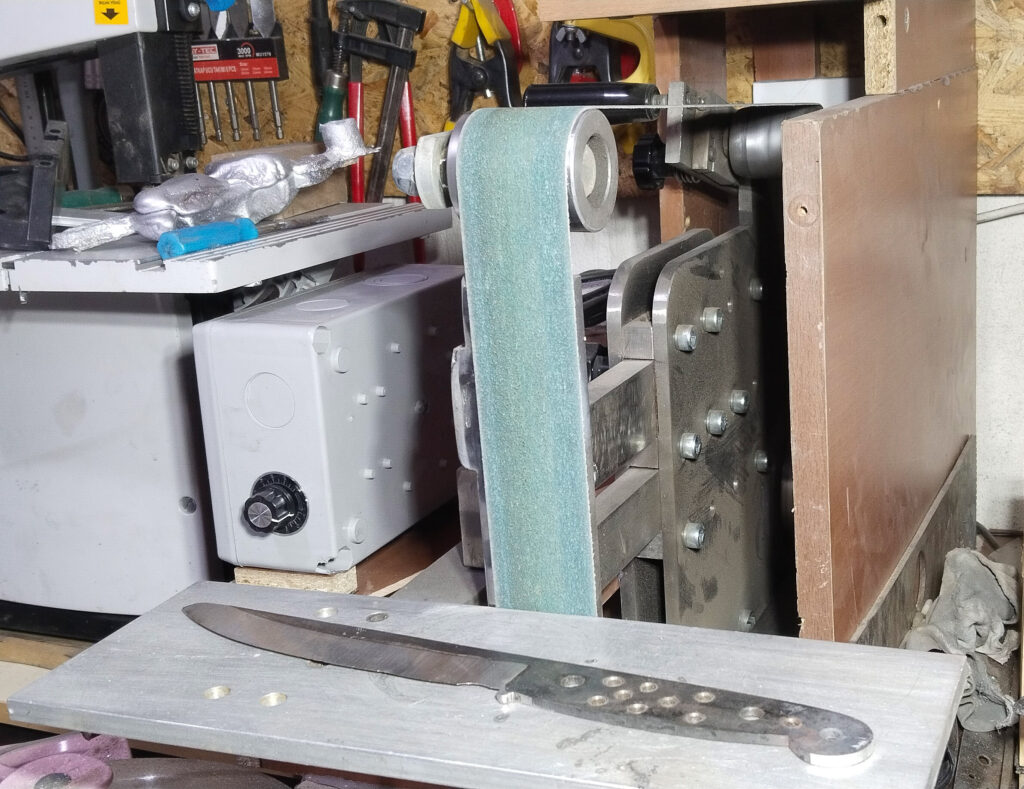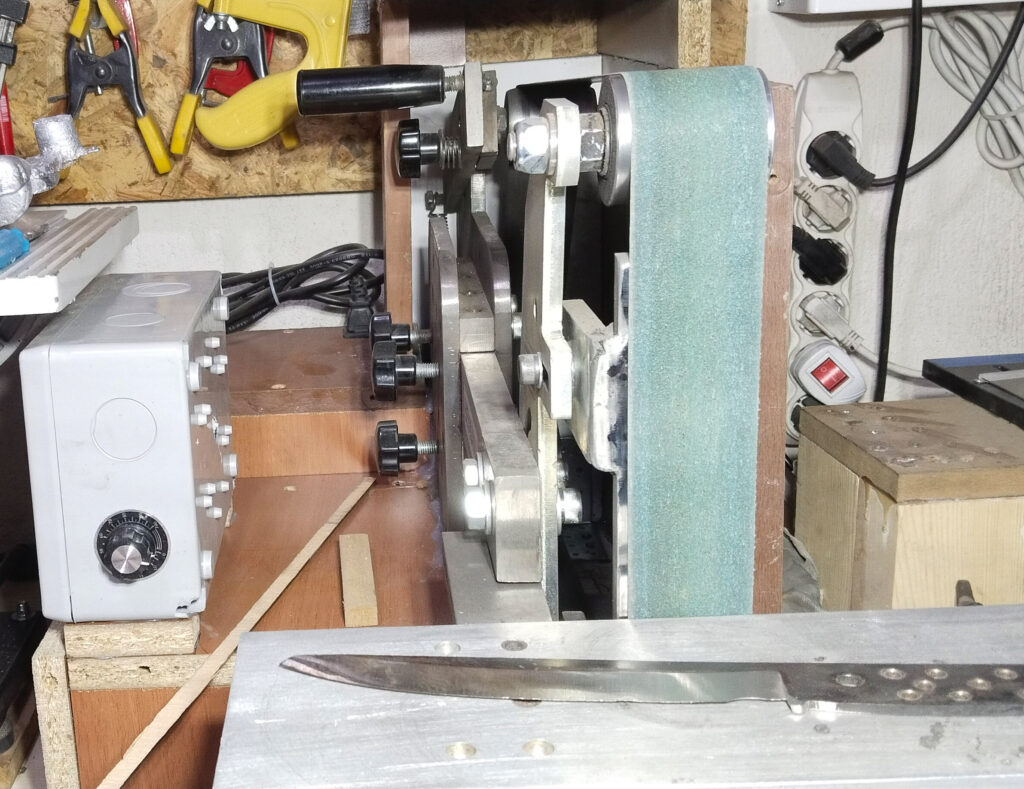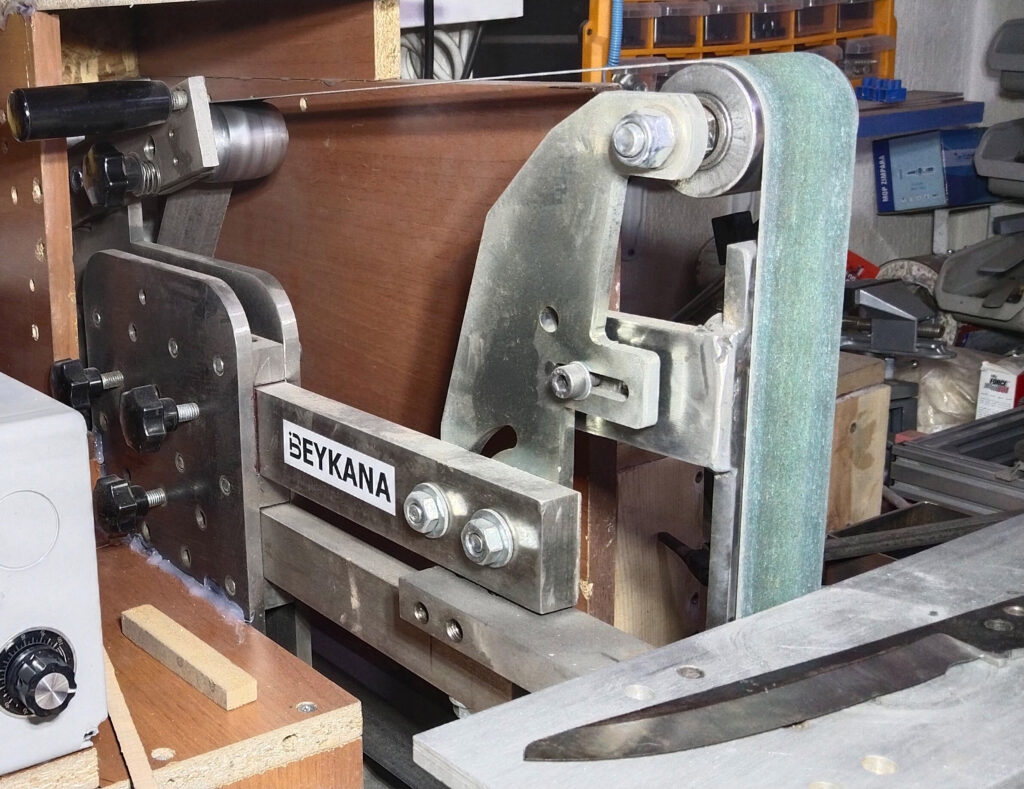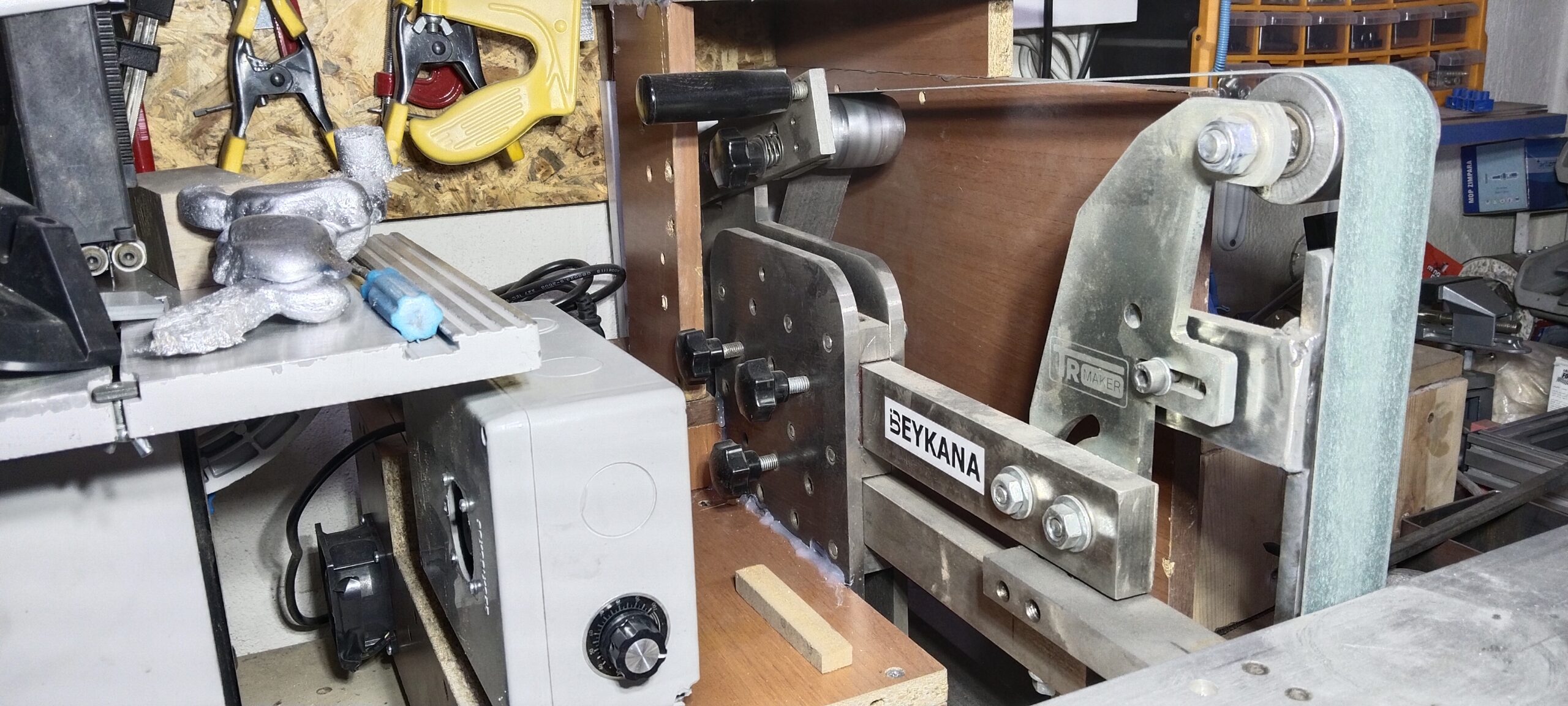

Treadmill Motor Belt Grinder: What You’ll Build
A treadmill motor belt grinder is a highly capable DIY machine that can upgrade a small workshop into something much closer to a professional knife making setup. With the right mechanical layout and a stable frame, it can handle stock removal, bevel grinding, shaping, deburring, and even fine finishing depending on your belt selection. The biggest advantage is cost: treadmill motors are often available from old machines, and they offer strong torque compared to many hobby-grade alternatives.
This guide focuses on a practical approach: build a rigid structure, keep tracking predictable, and use speed control safely—so the machine is useful not only for knife making but also for general metalworking and woodworking tasks.
Why a Treadmill Motor Belt Grinder Works So Well
A treadmill motor belt grinder build benefits from DC motor torque characteristics designed for continuous load. In grinding applications, “under load” means the belt sees resistance when you press steel or wood into it. A treadmill motor’s torque helps keep the belt moving consistently instead of stalling or bogging down.
Another major advantage is controllable speed. When you’re grinding a bevel, slower belt speed can reduce heat and improve control. When you’re removing material, higher speed helps productivity. That flexibility is one of the main reasons makers choose treadmill-motor-driven grinder builds.
Key Components in a Treadmill Motor Belt Grinder Setup
Most builds share a few core components that determine performance:
- A drive wheel connected to the motor
- An idler wheel and a tracking wheel with an adjustment mechanism
- A platen (flat grinding surface) and/or a contact wheel
- A stable tool rest for repeatable angles
Good tracking is not optional. If you want a grinder that feels “pro,” invest time in alignment and a tracking adjustment that holds position.
Frame, Tracking, and Alignment
The structural frame should ideally be steel box section (square tubing) or thick plate. Rigidity reduces vibration, keeps the belt running true, and improves surface finish. If the machine flexes, tracking becomes inconsistent and belts wear faster. Welded construction is common, but bolted assemblies can work if properly braced and tightened.
Tracking performance depends heavily on wheel alignment and tension geometry. Before calling the build finished, test tracking across the speed range and under light load, then re-check fasteners and alignment after a short run-in period.
Speed Control and Wiring Notes
Many treadmill motors come with a controller board, but compatibility varies. A safe setup includes:
- Proper grounding of the frame
- A correctly sized fuse or breaker
- A physical emergency stop
- Strain relief on cables and protected terminals
If you are not fully confident with mains wiring, have a qualified electrician check the final wiring. Performance is great—until safety is ignored.
Belt Selection: Where the Results Come From
People often focus on motor power, but abrasive belts control the final result. A strong belt lineup typically includes:
- Coarse ceramic belts for fast stock removal
- Medium grit for shaping and refining
- Fine grit / structured abrasives for finishing
- Optional polishing belts depending on your workflow
For knife making, belt choice and speed control matter a lot when you work near the cutting edge to avoid overheating and ruining heat treatment.
You can also visit our https://www.beykana.com/category/diy-tools/ page to explore similar DIY projects and tools.
Practical Workshop Uses
Once built and tuned, this machine becomes a general-purpose workhorse. Typical uses include:
- Knife profiling and bevel grinding
- Removing scale and cleaning surfaces
- Deburring cut parts after sawing or drilling
- Shaping wood handles and spacer materials
- Rounding edges and blending transitions
A well-built treadmill motor belt grinder can cover both aggressive grinding and controlled finishing simply by changing belts and adjusting speed.
Safety Checklist Before First Use
Before running at full speed, check these basics:
- Belt tracking stays stable through the full speed range
- All wheels spin freely and are aligned
- Guards and covers are installed where possible
- Fasteners are tight and secured (use thread locker where needed)
- Emergency stop is reachable and tested
Wear eye protection and consider hearing protection. Dust management is also important—especially when grinding metal and synthetic handle materials.
External Reference
If you want an overview of treadmill systems and their continuous-load design, this reference helps: Wikipedia – Treadmill
Final Notes
A well-designed treadmill motor belt grinder can deliver excellent results when the frame is rigid, tracking is stable, and speed control is configured safely. If you take time for alignment and finishing details, you’ll end up with a machine that supports serious knife making workflows without commercial grinder costs. This is why so many makers keep a treadmill motor belt grinder at the center of their workshop.
Content Images