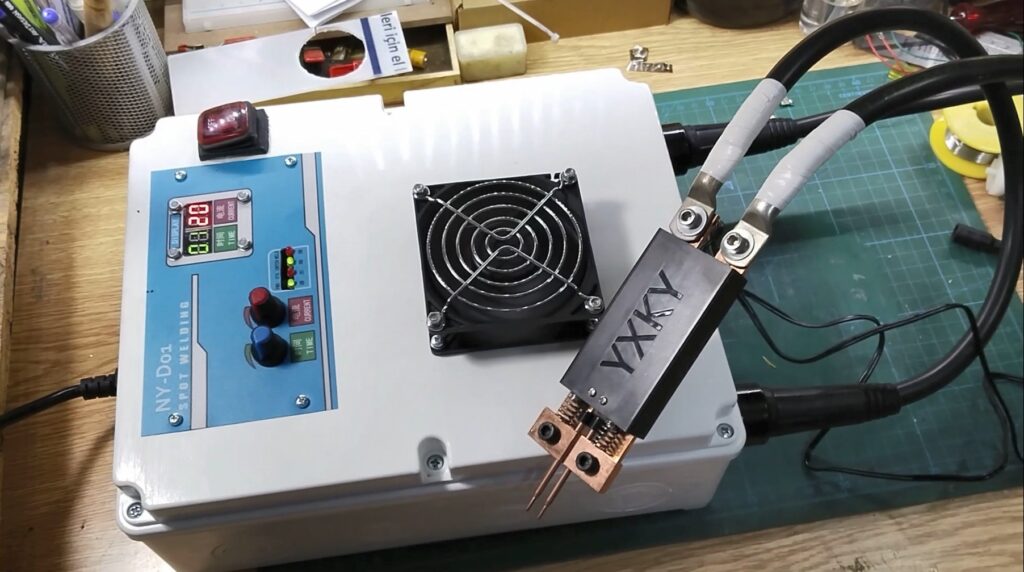
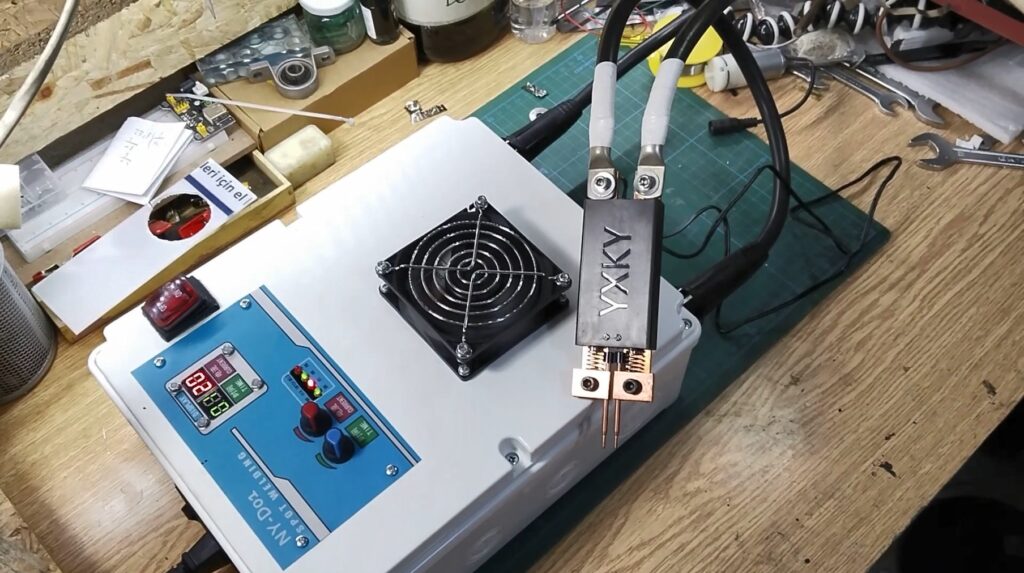
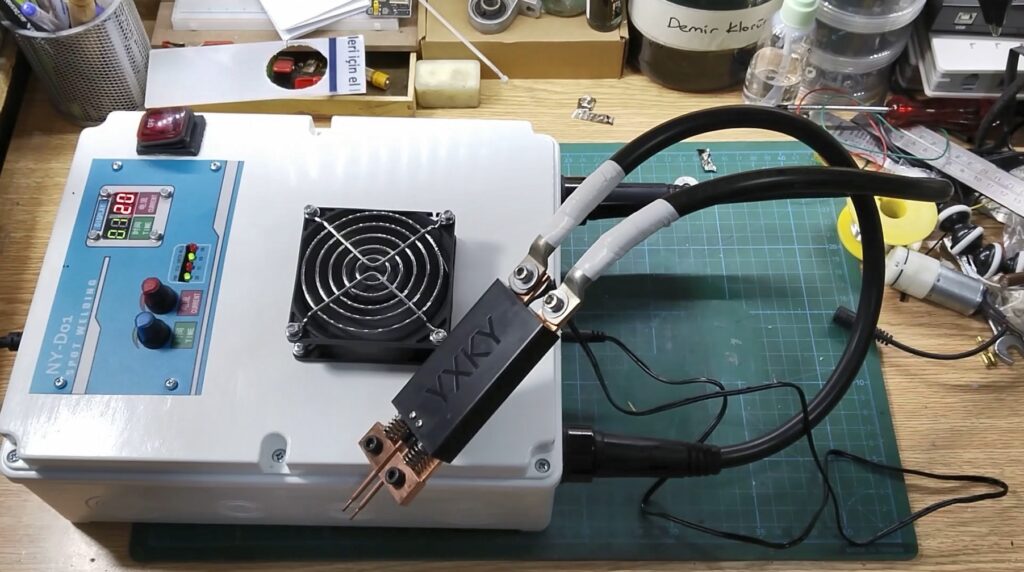
What is a DIY Spot Welder?
A DIY spot welder is an essential tool for anyone working with lithium-ion battery packs, especially 18650 cell assemblies used in e-bike batteries, power tools, and custom energy storage systems. Unlike soldering, spot welding allows you to connect nickel strips to battery terminals without excessive heat exposure that could damage internal cell chemistry.
Spot welding works by delivering localized heat between metal surfaces spot welding principle
Why Use a Microwave Oven Transformer?
Microwave oven transformers (MOT) are widely available and capable of producing extremely high current at low voltage when properly modified. This makes them ideal for resistance welding applications such as nickel strip welding in battery packs.
By removing the secondary winding and replacing it with a few turns of thick copper cable, the transformer can generate powerful current pulses suitable for welding nickel strips onto battery terminals.
This setup is commonly used in DIY battery projects because:
- It prevents overheating of lithium-ion cells
- Ensures reliable electrical contact
- Produces fast and consistent welds
- Reduces overall project cost
If you’re interested in similar DIY electronics projects, you can also check our detailed guide on building your own mini piston saw for workshop automation.
Welding 0.30 mm Nickel Strips
Welding thicker nickel strips such as 0.15 mm to 0.30 mm requires high peak current and precisely timed pulses. A DIY spot welder powered by a microwave transformer can easily handle this requirement when:
- Thick copper electrode cables are used
- Pulse duration is properly adjusted
- Contact pressure is applied correctly
- Transformer shunts are removed for higher output
The key factor in resistance welding is controlling the magnitude and duration of current flow between the electrodes. Too long a pulse may burn the strip, while too short may result in weak welds.
Applications in Battery Pack Building
This DIY spot welder setup is particularly useful for:
- 18650 battery pack assembly
- E-bike battery construction
- Power bank battery modules
- Robotics battery systems
- DIY electric vehicle projects
Spot welding is the preferred joining method in battery manufacturing because it delivers energy to the weld zone within milliseconds, minimizing heat transfer to the rest of the material.
Final Thoughts
Building your own DIY spot welder from a microwave oven transformer is a cost-effective and powerful solution for makers, engineers, and DIY enthusiasts. With proper electrode pressure and pulse timing, you can achieve professional-grade welds on nickel strips up to 0.30 mm thickness.
Whether you’re assembling custom battery packs or experimenting with new energy storage solutions, a DIY spot welder significantly improves build quality and electrical performance.
Real World Battery Pack Applications
When building lithium-ion battery packs for power tools, electric bikes, or DIY energy storage systems, using a reliable DIY spot welder becomes extremely important. A properly tuned microwave oven transformer spot welder allows you to weld nickel strips onto 18650 battery cells without causing excessive heat buildup inside the cell. This is critical for maintaining battery lifespan and safety.
Compared to traditional soldering methods, spot welding creates localized heat only at the weld points, minimizing the risk of damaging sensitive lithium-ion chemistry. This is why professional battery manufacturers rely on spot welding rather than soldering when assembling high-capacity battery packs.
You can also see how the transformer preparation stage was completed in the first part of this project by visiting: microwave oven transformer setup guide
These practical applications demonstrate how a DIY spot welder can be effectively used for battery pack assembly and nickel strip welding tasks in real workshop conditions.
Content Images