
Introduction
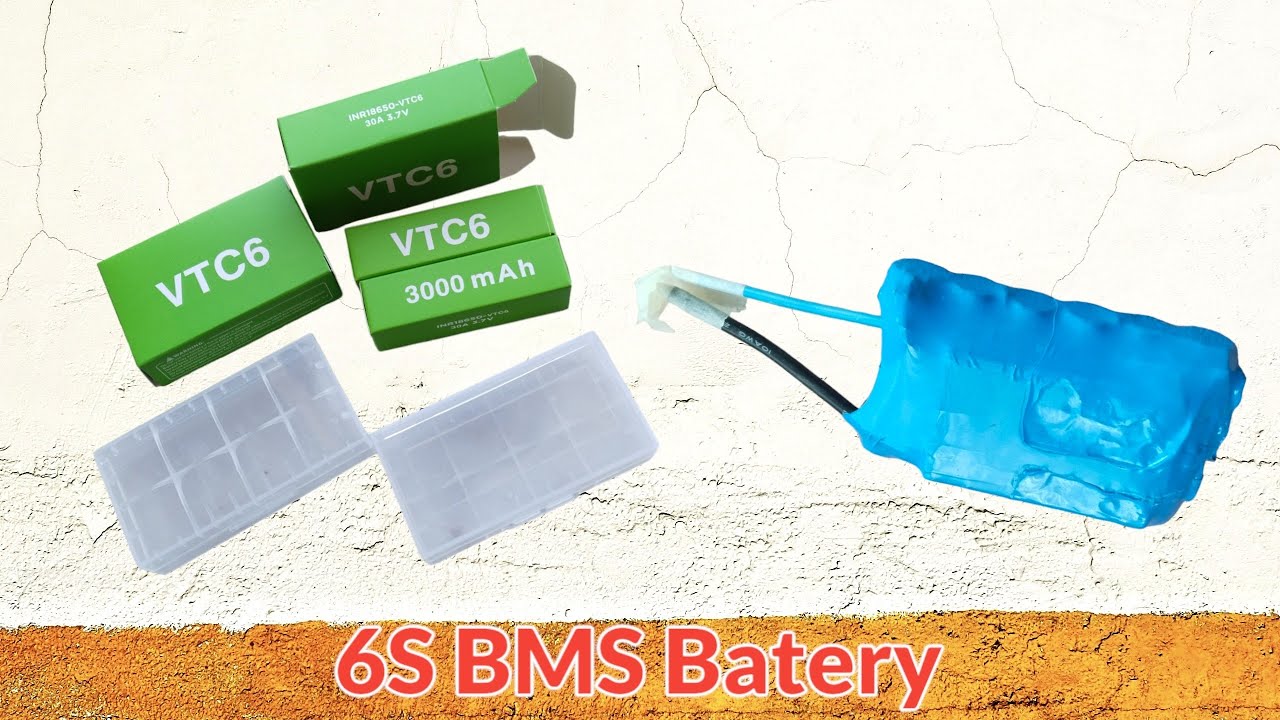
A 6S Lithium Battery Pack with BMS is widely used in DIY electronics, cordless power tools, and portable workshop equipment. Compared to traditional Ni-Cd or lead-acid battery solutions, lithium battery packs provide improved energy density, lighter weight, and longer operational life. In this project, the goal is to assemble a compact battery pack that delivers stable output voltage while maintaining safety through the integration of a Battery Management System (BMS).
Lithium-ion battery technology has become a standard power solution for modern maker projects. Whether you are designing a custom power bank or upgrading cordless workshop tools, understanding how to assemble a multi-series lithium battery pack is essential for reliable performance.
Why Use a 6S Configuration?
A 6S configuration connects six lithium-ion cells in series, resulting in a nominal voltage of approximately 22.2V. This voltage level is suitable for powering devices such as:
- Mini angle grinders
- CNC machines
- DIY power banks
- Portable lighting systems
- Battery-powered workshop tools
A properly assembled 6S Lithium Battery Pack with BMS helps maintain voltage stability during load variations. This ensures consistent performance during extended usage, particularly in workshop environments where portable power solutions are frequently required.
Role of the Battery Management System (BMS)
Integrating a Battery Management System improves the safety and operational stability of lithium battery packs. The BMS monitors individual cell voltages and prevents:
- Overcharging
- Over-discharging
- Short circuits
- Excessive current draw
Using a compatible BMS board helps balance the voltage levels between individual cells during charging cycles. Balanced charging improves battery longevity and reduces the risk of premature cell degradation.
For more information about lithium battery safety guidelines, you may refer to external technical documentation such as:
https://batteryuniversity.com/article/bu-409-charging-lithium-ion
Assembly Process Overview
Before starting the assembly process, ensure that all lithium cells have matching voltage levels. Mismatched cells may cause imbalance within the battery pack, affecting performance over time.
The following steps summarize the assembly workflow:
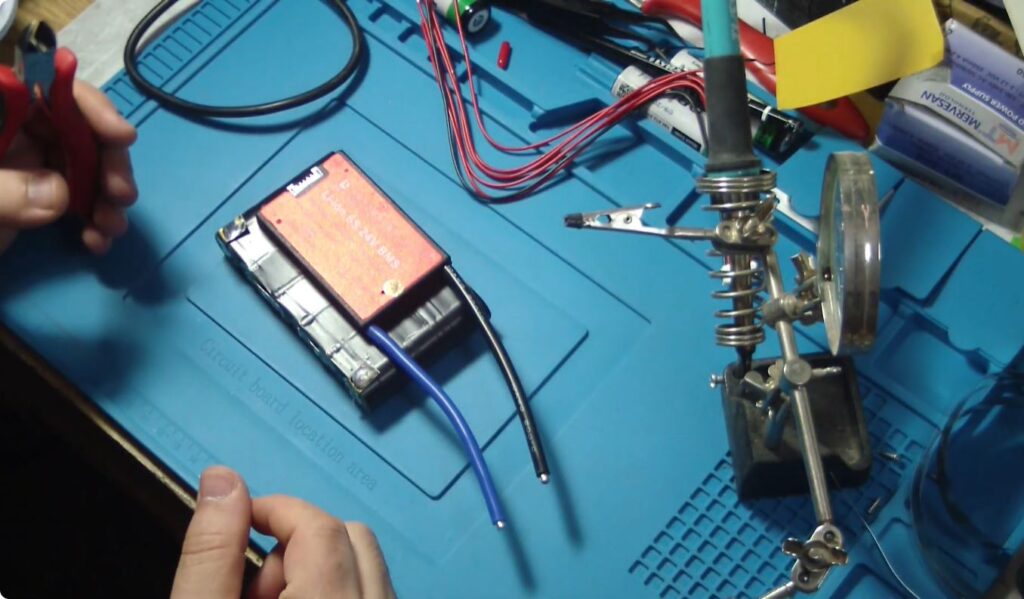
- Arrange six lithium-ion cells in a series configuration
- Spot weld nickel strips between cell terminals
- Connect BMS balance wires according to the wiring diagram
- Attach output terminals
- Insulate exposed conductive areas
- Place the assembled battery pack into a protective enclosure
If you are planning to integrate this battery pack into a portable DIY system, you may also be interested in the following internal project:
👉 https://www.beykana.com/diy-adjustable-power-bank-6s-lithium/
Enclosure and Protection
Housing the battery pack inside a rigid enclosure protects internal components from mechanical impact. Adequate insulation between cells prevents accidental short circuits during operation.
Ventilation openings within the enclosure help maintain airflow around the battery cells. Proper airflow reduces thermal buildup during charging and discharging cycles, improving long-term reliability of the 6S Lithium Battery Pack with BMS.
Video Integration Note
Performance Considerations
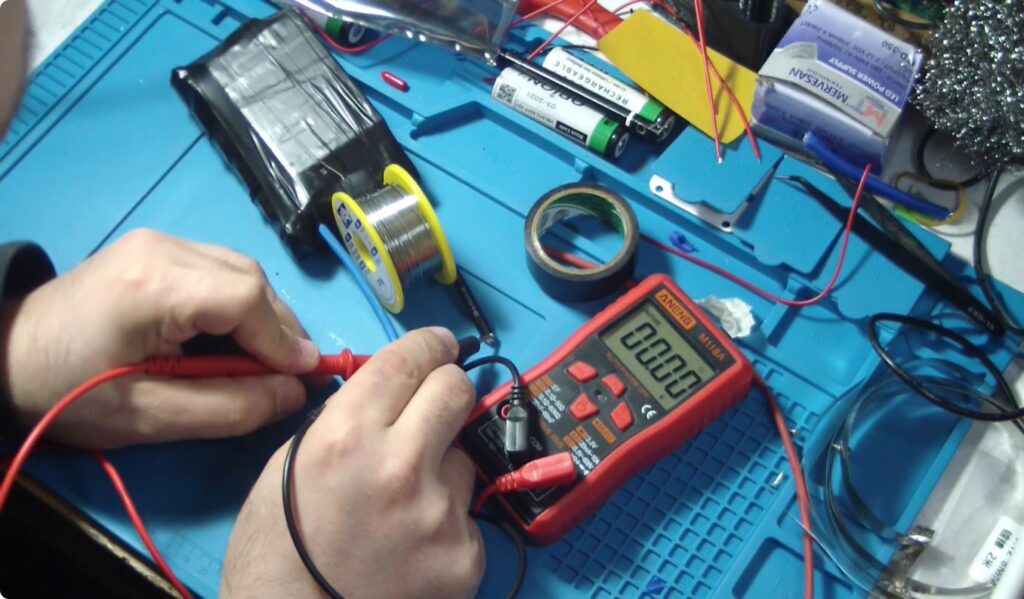
Maintaining uniform cell voltage improves discharge efficiency of the battery pack. Monitoring pack voltage during operation helps detect irregularities in real-time. Periodic inspection of balance connections ensures consistent performance during extended usage cycles.
The assembled 6S Lithium Battery Pack with BMS can serve as a stable portable power source for various DIY applications, including CNC machines and battery-powered workshop equipment.
Long-Term Usage
Proper charging practices significantly influence battery lifespan. Using a charger compatible with the pack’s voltage rating prevents stress on individual cells. Avoid deep discharge cycles whenever possible to maintain optimal battery health.
Routine inspection of wiring connections and insulation materials helps prevent electrical failures during prolonged use. Ensuring safe operating conditions improves both efficiency and durability of the battery pack.
Practical Applications of a 6S Lithium Battery Pack with BMS
A well-assembled 6S Lithium Battery Pack with BMS can be used in a wide range of portable DIY systems where stable voltage output is required. In many workshop environments, maker projects such as custom CNC machines, mini lathes, engraving systems, and portable sanding units rely on dependable battery-powered solutions for mobility and efficiency.
Using a lithium battery pack in such applications allows you to operate your equipment without being restricted by fixed power outlets. This is particularly useful when working on outdoor projects or in mobile workshop setups. Additionally, lithium battery packs offer a significantly higher energy-to-weight ratio compared to traditional battery technologies, making them ideal for compact tool integrations.
Another advantage of implementing a 6S Lithium Battery Pack with BMS in DIY electronics projects is reduced maintenance requirements. Unlike older battery types, lithium-ion cells do not suffer from memory effect and maintain consistent performance across multiple charge cycles. When combined with a properly configured Battery Management System, the pack becomes more reliable for long-term use in demanding applications.
Whether you are designing a custom power bank, upgrading battery-operated tools, or creating an independent power source for your portable CNC system, integrating a lithium battery solution improves overall system flexibility and operational stability. This makes lithium battery packs a preferred energy solution for modern DIY and maker-based engineering projects.
Content Images