
Generating Electricity from Potatoes Using Simple Materials
The concept of producing electricity from potatoes is a fascinating demonstration of electrochemical energy conversion. This simple experiment allows makers, students, and hobbyists to explore how chemical reactions can be used to generate electrical current using everyday materials.
By inserting two different metal electrodes into a potato, it is possible to create a basic electrochemical cell capable of powering low-energy devices such as LEDs or digital clocks.
How Electricity from Potatoes Works
Electricity from potatoes is generated through a chemical reaction between dissimilar metals placed inside an electrolyte medium. The potato acts as the electrolyte, allowing ions to move between the electrodes and complete the electrical circuit.
Basic Components Required
To generate electricity from potatoes, you will typically need:
- Potatoes
- Copper electrode
- Zinc electrode
- Connecting wires
- LED or small load
The difference in electrochemical potential between the electrodes causes electrons to flow through the external circuit.
👉 You may also want to read: Mini Electric Screwdriver DIY Project
Building a Potato Battery
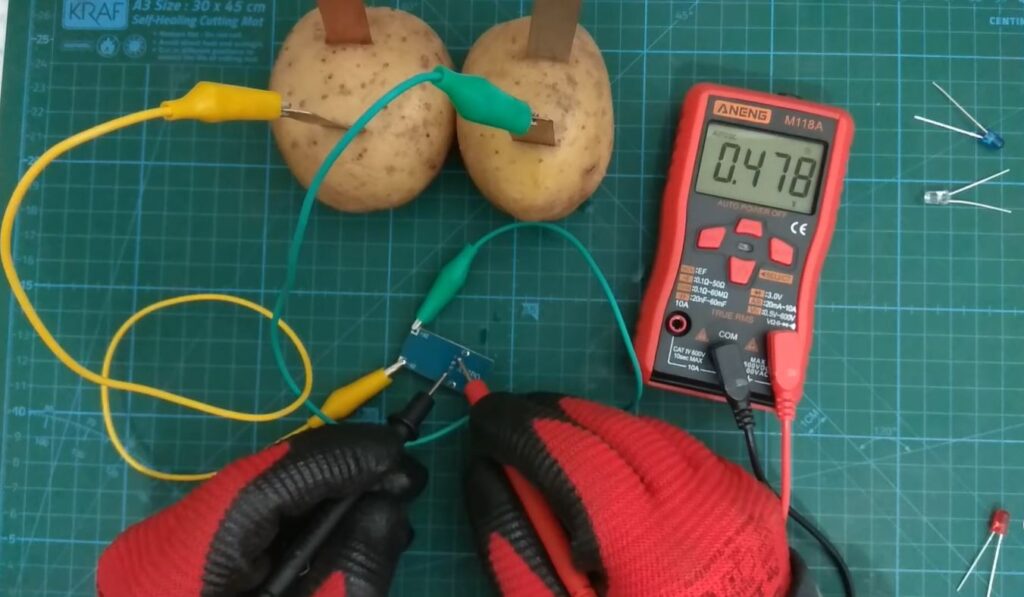
To build a working circuit capable of producing electricity from potatoes, insert a copper electrode and a zinc electrode into each potato. Multiple potato cells can then be connected in series to increase voltage output.
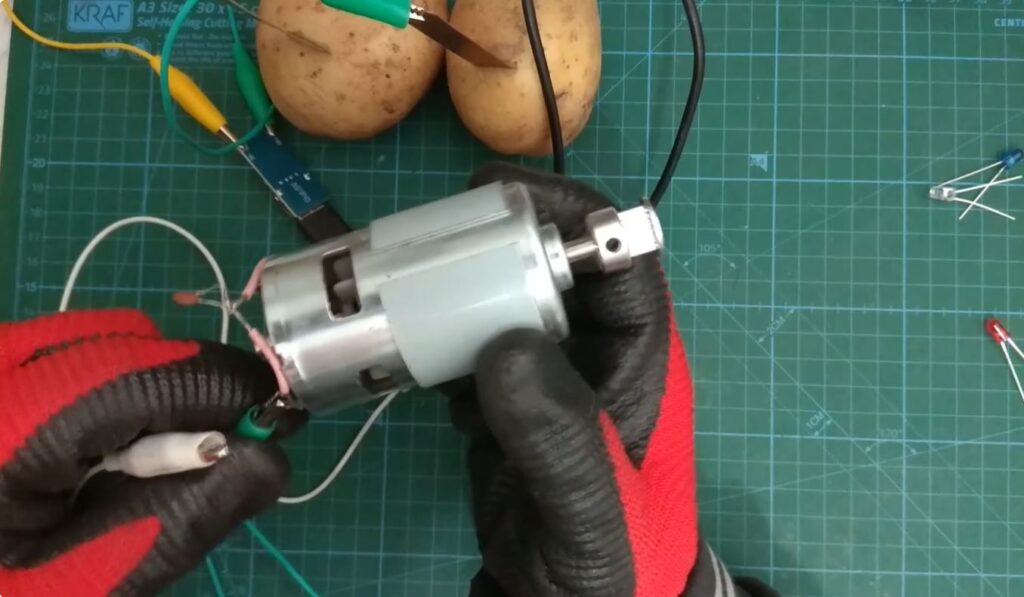
Connecting several cells together improves the ability to power small electronic components.
Increasing Output Voltage
- Use multiple potato cells
- Ensure proper wiring
- Maintain electrode contact
- Avoid short circuits
These steps improve the efficiency of electricity from potatoes experiments.
Applications of Potato-Based Electricity
Although the electrical output is limited, electricity from potatoes can be used for:
- Educational demonstrations
- Science experiments
- Basic LED lighting
- Low-power electronic devices
- Learning electrochemical principles
If you would like to learn more about electrochemical cells, you can visit: Wikipedia – Electrochemical Cell
Additional Experiment Notes
Proper placement of electrodes inside the potato improves conductivity and reduces internal resistance. Cleaning the electrode surfaces before insertion may also improve current flow during the experiment.
Testing the circuit using different potato sizes can help determine the most efficient configuration.
Final Considerations
Generating electricity from potatoes demonstrates how simple chemical reactions can be used to produce usable electrical energy. This experiment offers valuable insight into electrochemical energy conversion processes.
With proper setup, electricity from potatoes can power low-energy devices for demonstration purposes.
Practical Experiment Setup
When attempting to generate electrical current using natural electrolyte sources, maintaining proper spacing between electrodes is essential for stable circuit performance. The distance between the copper and zinc electrodes directly affects the internal resistance of the potato cell. Keeping the electrodes positioned securely inside the potato improves the consistency of the generated voltage and reduces fluctuations during measurement. Using clean electrode surfaces also enhances ion exchange between the metals and the electrolyte medium.
Series Connection Efficiency
Connecting multiple potato cells in a series configuration allows the voltage output of each individual cell to combine. This setup makes it easier to power small electronic components such as LEDs or low-voltage sensors. Ensuring correct polarity when connecting each potato cell improves current flow and prevents reverse voltage conditions within the circuit. Stable wire connections between each electrode also help maintain circuit continuity throughout the experiment.
Educational Value of the Experiment
Demonstrating electrochemical energy generation through simple materials can help improve understanding of basic electrical principles. This type of experiment is frequently used in educational settings to explain voltage generation, current flow, and circuit design fundamentals. Testing different electrode materials or varying potato sizes may also influence the output voltage, providing an opportunity to observe how chemical reactions impact electrical performance in practical applications.
Additional Performance Observations
Environmental conditions such as temperature and moisture content inside the potato may influence the stability of the generated electrical output. Fresh potatoes generally provide better conductivity compared to dried or aged ones due to higher internal moisture levels. Monitoring voltage output using a multimeter during the experiment can help determine whether additional potato cells are required for powering small electronic loads. Ensuring that all wire connections remain firmly attached throughout the setup also helps maintain circuit stability during extended testing periods.
Content Images