
Introduction
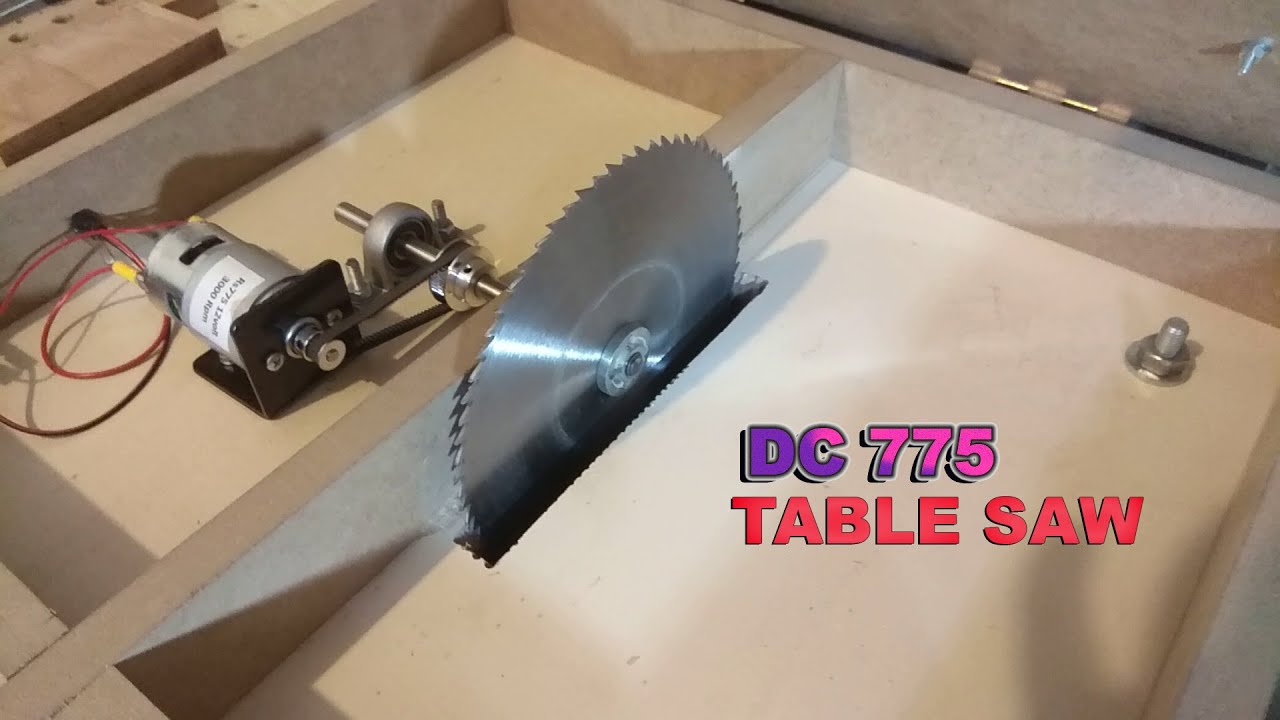
DIY Table Circular Saw builds are becoming increasingly popular among makers who need compact and precise cutting tools for small workshop projects. In this project, a DC 775 motor is used as the primary drive unit to construct a functional table saw capable of handling various cutting operations on wood and plastic materials.
Unlike bulky commercial machines, this system offers a lightweight and portable solution suitable for home-based fabrication environments.
Why Use a DC 775 Motor?
The DC 775 motor is known for its relatively high rotational speed and compact size. These characteristics make it an excellent candidate for use in a DIY Table Circular Saw configuration.
With proper mounting and blade alignment, the motor can deliver consistent performance suitable for cutting thin wooden sheets, acrylic panels, or lightweight composite materials. Its widespread availability also makes it a cost-effective option for makers looking to build their own cutting equipment.
Mechanical Assembly
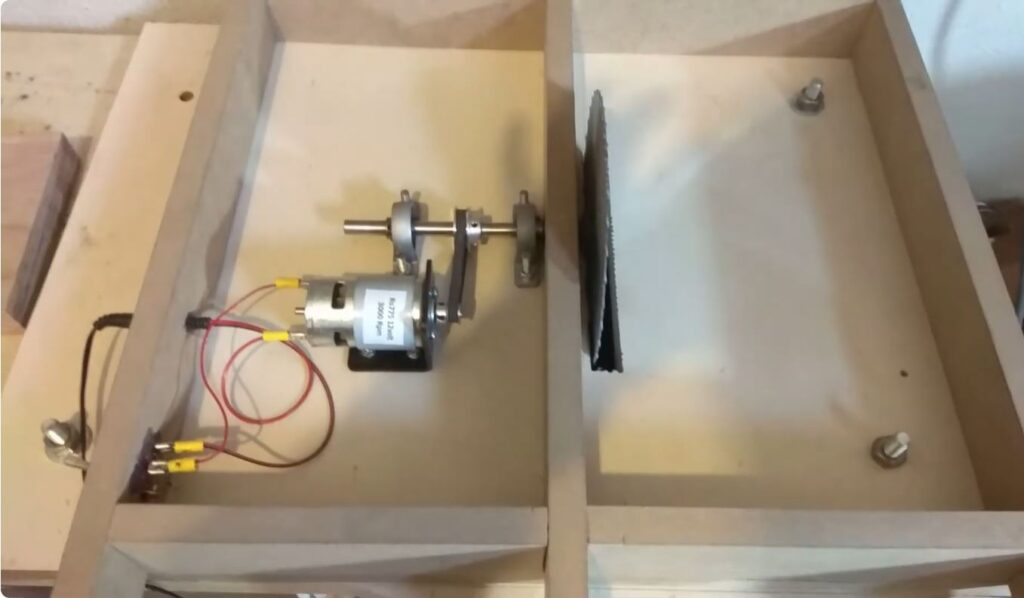
Building a DIY Table Circular Saw requires a stable base structure that minimizes vibration during operation. The motor must be mounted securely beneath the cutting table while maintaining proper shaft alignment with the circular saw blade.
Ensuring that the blade remains perpendicular to the table surface is essential for achieving clean and accurate cuts. Adjustable guides may also be integrated into the table design to improve material positioning during operation.
Safety Considerations
When constructing a DIY Table Circular Saw, safety should always be a top priority. Installing a blade guard helps prevent accidental contact with the rotating cutting disc.
Additionally, using a stable power supply ensures that the motor operates within its rated voltage range. Overloading the system may lead to overheating or reduced motor lifespan.
For general safety practices when working with rotating cutting tools, you may refer to:
https://en.wikipedia.org/wiki/Table_saw
Application Areas
The DIY Table Circular Saw described in this project can be used for a variety of workshop tasks such as:
- Straight cutting of wooden panels
- Trimming plastic sheets
- Preparing material for CNC machining
- Model making projects
- Small furniture components
These applications benefit from the controlled cutting capability provided by the compact table saw system.
For related DIY workshop machinery projects, you may also explore:
https://www.beykana.com/category/diy-tools/
Performance Optimization
Proper blade selection plays an important role in the performance of a DIY Table Circular Saw. Thin cutting discs reduce motor load and allow smoother operation.
Using a speed controller can also improve cutting precision by adjusting the rotational speed based on material type.
Structural Stability
Another important factor in the operation of a DIY Table Circular Saw is structural rigidity. The table surface should remain level during cutting operations to prevent material slippage or blade misalignment.
Rubber mounts or vibration-damping pads may be used to enhance stability during operation.
Workshop Integration
The compact design of this DIY Table Circular Saw allows it to be integrated easily into existing workshop setups. It can be mounted onto a larger workbench or used as a standalone cutting station.
Sustainability Benefits
Constructing a DIY Table Circular Saw from commonly available components reduces dependency on expensive commercial machines. Repurposing DC motors for mechanical projects also contributes to reducing electronic waste.
This approach encourages sustainable workshop practices while allowing makers to build custom tools tailored to their needs.
Conclusion
A well-designed DIY Table Circular Saw powered by a DC 775 motor provides an efficient cutting solution for small-scale fabrication projects. With proper assembly and safety precautions, the system can deliver reliable performance suitable for various workshop applications.
This project demonstrates how compact mechanical tools can be constructed from affordable components to enhance productivity in maker environments.
Additional Workshop Benefits
Using a DIY Table Circular Saw in compact workshop environments allows makers to perform precise cutting operations without relying on large industrial machinery. This type of setup is especially useful for hobbyists working on small fabrication tasks where space efficiency and portability are important. A DIY Table Circular Saw can be easily integrated into custom workbenches and adapted for various material cutting applications such as MDF, plywood, or acrylic sheets.
Content Images