
Introduction
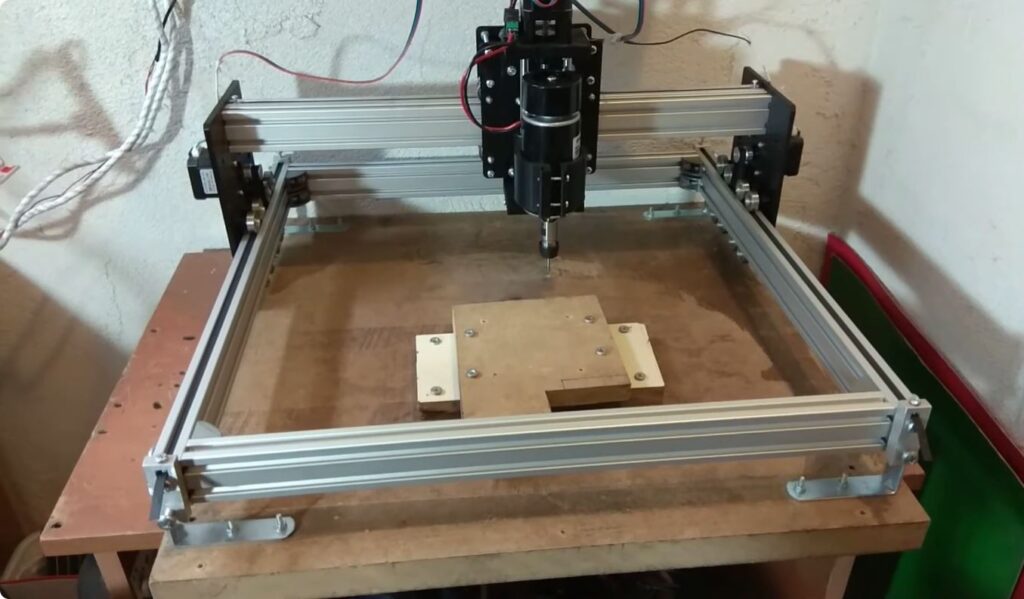
CNC Engraving Demonstration projects are useful for evaluating the precision and motion control capabilities of CNC machines. In this demonstration, engraving operations are performed on different material types to analyze machining accuracy and surface finish quality.
This CNC Engraving Demonstration highlights how controlled tool movement enables detailed design transfer onto workpiece surfaces.
Understanding CNC Engraving
CNC Engraving involves removing a thin layer of material using a rotating cutting tool. During this CNC Engraving Demonstration, the machine follows programmed toolpaths to reproduce digital designs with high accuracy.
This process is commonly used in:
- Metal marking
- Acrylic engraving
- PCB fabrication
- Decorative panel creation
- Nameplate production
Each application benefits from the precision offered by automated tool movement.
Machine Setup
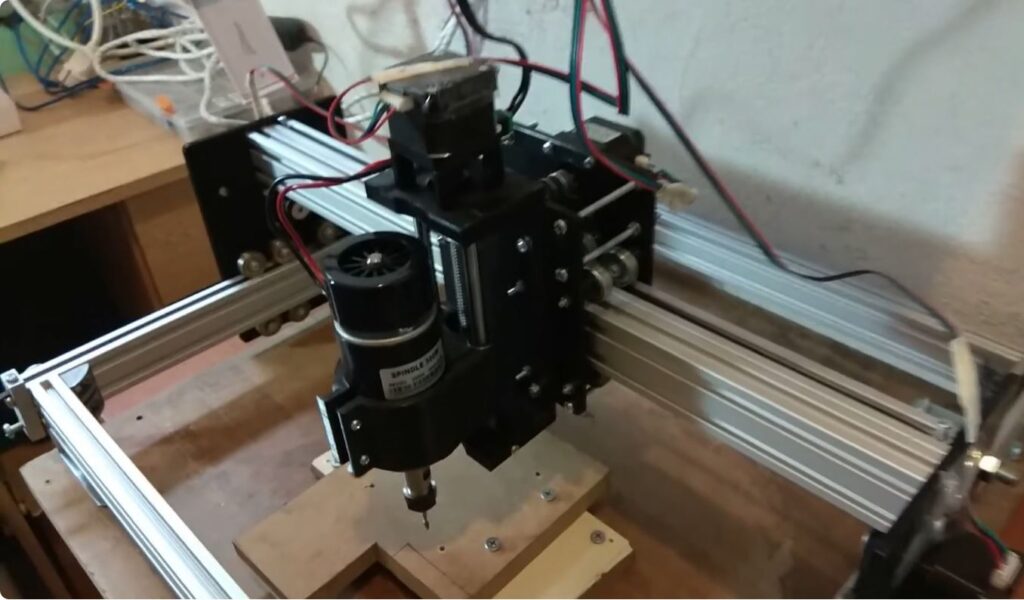
Before starting a CNC Engraving Demonstration, the machine must be properly calibrated. Accurate alignment of the workpiece and cutting tool ensures that engraving depth remains consistent across the material surface.
Tool mounting should also be checked to prevent vibration during operation.
Material Preparation
Workpiece preparation plays an important role in CNC Engraving Demonstration results. Materials such as wood, plastic, or soft metal should be secured firmly to the machine bed.
Loose material may shift during operation, causing engraving inaccuracies.
Toolpath Execution
In a CNC Engraving Demonstration, the cutting tool follows a predefined toolpath generated from CAD software.
Correct feed rate and spindle speed settings improve engraving quality and reduce tool wear.
For more information about CNC machining accuracy, you may refer to:
https://en-wikipedia-org.translate.goog/wiki/Computer_numerical_control
Application Areas
The CNC Engraving Demonstration presented here can be applied to various workshop tasks such as:
- Logo engraving
- Pattern creation
- Surface text marking
- Artistic fabrication
- Prototype development
These operations demonstrate the versatility of CNC engraving technology.
For related CNC machine projects, you may also explore:
https://www.beykana.com/category/cnc-projects/
Performance Evaluation
Evaluating the output of a CNC Engraving Demonstration helps determine whether the machine is capable of producing fine details.
Surface smoothness, engraving depth, and dimensional accuracy should be examined after operation.
Operational Testing
Multiple engraving passes may be required during a CNC Engraving Demonstration to achieve the desired depth.
Testing different feed rates allows users to optimize engraving performance.
Workshop Integration
A CNC Engraving Demonstration can also be used to test machine capability before performing production tasks.
This allows users to verify calibration accuracy and tool performance.
Sustainability Considerations
Using CNC engraving technology reduces material waste by ensuring accurate machining results.
Performing regular CNC Engraving Demonstration tests helps maintain machine efficiency over time.
Conclusion
A properly executed CNC Engraving Demonstration allows users to evaluate machine performance and achieve precise engraving results.
With correct setup and calibration, CNC machines can produce detailed designs on a variety of materials.
Additional Project Resources
In many CNC-based fabrication projects, using customized mounting parts can improve engraving stability and reduce vibration during machining operations. Components such as tool holders, workpiece clamps, and alignment guides may be produced using 3D printing technology to enhance overall machine performance. These additional structural elements can contribute to better tool positioning and improved engraving accuracy during repeated operations.
You can access the 3D printing files used in this project from the following link:
https://www.thingiverse.com/thing:4968101
These downloadable design files allow users to recreate the necessary support parts required for the engraving setup and integrate them directly into their own CNC machine configuration.
Implementing properly designed support structures in CNC engraving setups can significantly enhance machining consistency. Stable fixtures and accurately positioned tool mounts help prevent unwanted movement during operation, resulting in improved surface quality on engraved parts. This approach is especially beneficial when performing repetitive engraving tasks on materials that require fine detail and dimensional precision throughout the machining process.
Content Images